
Ref BT-002 · DAEWOO
CONSTRUCTION MACHINERY / SHARP & TIGER TEETH
Excavator Sharp & Tiger Teeth
Sharp, pointed tooth profiles for tighter penetration in compacted, frozen or difficult ground.
- 17 catalog references
- OEM / custom support
- Multi-brand compatibility
SHARP / TIGER TEETH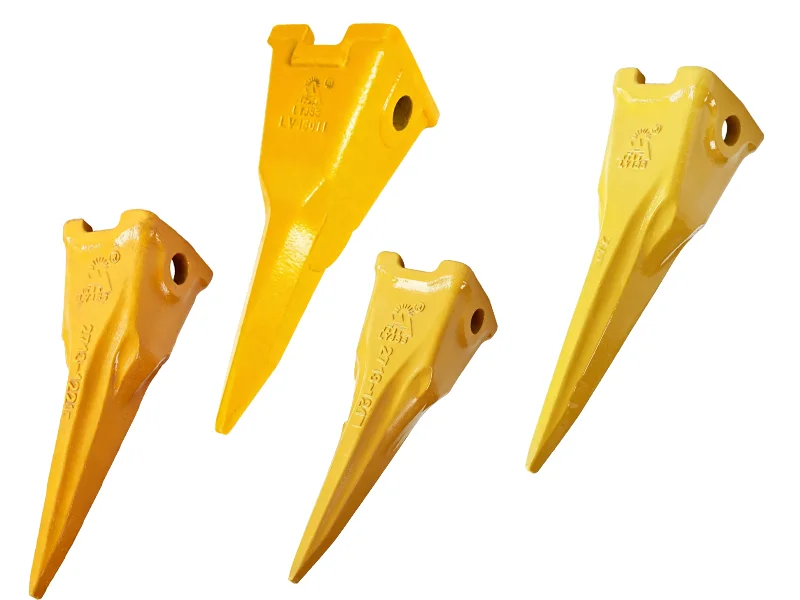 REPRESENTATIVE REFERENCES · 17
OEM / Custom InquiriesMultiple Model ReferencesComponent ReferencesBulk Order Inquiries
CATEGORY OVERVIEW
What Are Sharp & Tiger Teeth?
Sharp and tiger teeth use a narrow, pointed profile to concentrate digging force at the tip. They are used where a wider standard tooth cannot penetrate easily, such as compacted soil, hard clay or frozen ground. This category lists pointed-profile references identified by source model or brand label. The images show tooth form only; length, tip geometry, pin or retainer connection and adapter fit are confirmed from the part number, drawing or measurement. Profile choice affects both penetration and wear life, so the working conditions matter as much as the machine model. Provide the existing reference and a description of the ground being worked.
- Concentrated penetration
- Narrow tip profile
- Compacted ground use
- OEM / custom available
BROWSE BY EQUIPMENT BRAND
Browse Products by Equipment Brand
17 product references
Select an equipment brand to narrow the product range.
Showing 17 of 17 products
Ref BT-005 · DAEWOO
DAEWOO 220 Sharp Bucket Tooth
Ref BT-009 · DAEWOO
DAEWOO 300 Sharp Bucket Tooth
Ref BT-012 · DAEWOO
DAEWOO 360 Sharp Bucket Tooth
Ref BT-016 · DAEWOO
DAEWOO 500 Sharp Bucket Tooth
Ref BT-028 · CAT
CAT 325 Sharp Bucket Tooth
Ref BT-029 · CAT
CAT 325 Sharp Bucket Tooth · Reference 2
Ref BT-033 · CAT
CAT 330 Sharp Bucket Tooth
Ref BT-037 · CAT
CAT 345 Sharp Bucket Tooth
Ref BT-062 · SANY
SANY 700 Sharp Bucket Tooth
Ref BT-071 · Volvo
Volvo 360 Sharp Bucket Tooth
Ref BT-076 · Volvo
Volvo 480 Sharp Bucket Tooth
Ref BT-077 · Volvo
Volvo 480 Sharp Bucket Tooth · Reference 2
Ref BT-088 · Komatsu
Komatsu 300 Sharp Bucket Tooth
Ref BT-089 · Komatsu
Komatsu 300 Sharp Bucket Tooth · Reference 2
Ref BT-093 · Komatsu
Komatsu 400 Sharp Bucket Tooth
Ref BT-094 · Komatsu
Komatsu 400 Sharp Bucket Tooth · Reference 2
No products found for this brand
We may still be able to supply a compatible replacement.
Request Matching Help →Brand names identify catalog references and do not imply affiliation. Model references alone do not confirm compatibility. Numbered references distinguish source entries and do not establish different geometries.
When to use tiger teeth
Tiger teeth are chosen for penetration rather than wear life. The point is long and narrow, so digging force is concentrated at the tip and the tooth enters compacted soil, hard clay, frozen ground and root-bound material that a standard tooth skates over.
The trade works both ways: a narrow tip carries less wear volume, so a tiger tooth is normally changed more often than a standard profile in the same ground. Fitting tiger teeth where the difficulty is impact rather than penetration - solid rock, blocky ground, demolition debris - usually ends with a broken tooth rather than a worn one.
Fitting them at the corners only, with standard or rock profiles through the centre, is common practice: the corners take the hardest penetration load while the centre carries the bulk of the wear.
A tiger tooth wearing faster than a standard tooth is expected behaviour, not a quality fault: the profile trades wear volume for penetration.
Tiger teeth vs twin tiger teeth
A tiger tooth has one point. A twin tiger tooth splits the working end into two narrower points with a notch between them, concentrating load on two tips instead of one, which helps where the ground is hard but fissured and keeps a cutting action for longer as the tips wear back.
The trade is the same one, pushed further: less material behind each point means faster wear and a greater chance of a tip breaking under impact. The two forms are not interchangeable on a bucket set up for one of them, because the working end changes the breakout behaviour of the whole lip.
The references listed on this page are single-point tiger profiles. A twin-point form is reviewed from a drawing or a sample rather than ordered from this catalog.
Send the part number or a dimensioned photograph if the existing part is a twin-point form, so the difference is visible before a replacement is proposed.
A MODEL IS ONLY THE START
Can’t Find Your Part?
Send the details you have so the part can be identified and reviewed.
Send Your Requirement →- Part number & machine model
- Drawing or mounting dimensions
- Product photographs
- Sample specifications
- Required quantity
COMPATIBLE EQUIPMENT BRANDS
Compatible Equipment Brands
5 brands represented in this category.
 DAEWOO
Sharp and tiger tooth references for selected DAEWOO machines.
5 references CAT
Sharp and tiger tooth references for selected CAT machines.
4 references Komatsu
Sharp and tiger tooth references for selected Komatsu machines.
4 references Volvo
Sharp and tiger tooth references for selected Volvo machines.
3 references SANY
Sharp and tiger tooth references for selected SANY machines.
1 reference
Brand names identify catalog references and do not imply affiliation. Confirm fit by part number and dimensions.
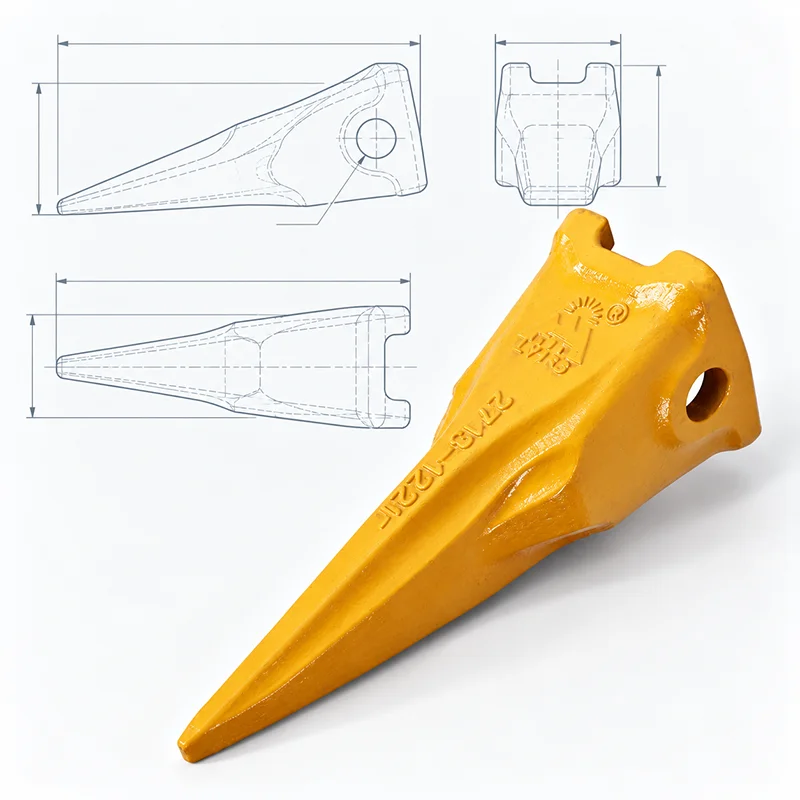 OEM / CUSTOM CASTING · TIGER TOOTH
BEYOND THE CATALOG
OEM & Custom Casting
Start a manufacturing review with your drawing, sample or existing part specification. Include tooth profiles, adapter connections and part numbers.
Drawing-based requirements
Sample reference
Custom dimensions
Branding / marking
DEFINE YOUR REQUIREMENTS
Casting & Manufacturing Review
Use these stages to specify the process and inspection requirements for your part.
01
Casting
Part geometry & material
02
Heat Treatment
Hardness requirements
03
Machining
Mounting dimensions
04
Inspection
Acceptance criteria
05
Surface Finishing
Surface requirements
Material grade, hardness, dimensions and acceptance criteria are confirmed during technical review.
View Our Casting CapabilitiesBUILT FOR REAL WORK
Applications
Bucket teeth, adapters and wear parts for demanding earthmoving excavation environments.
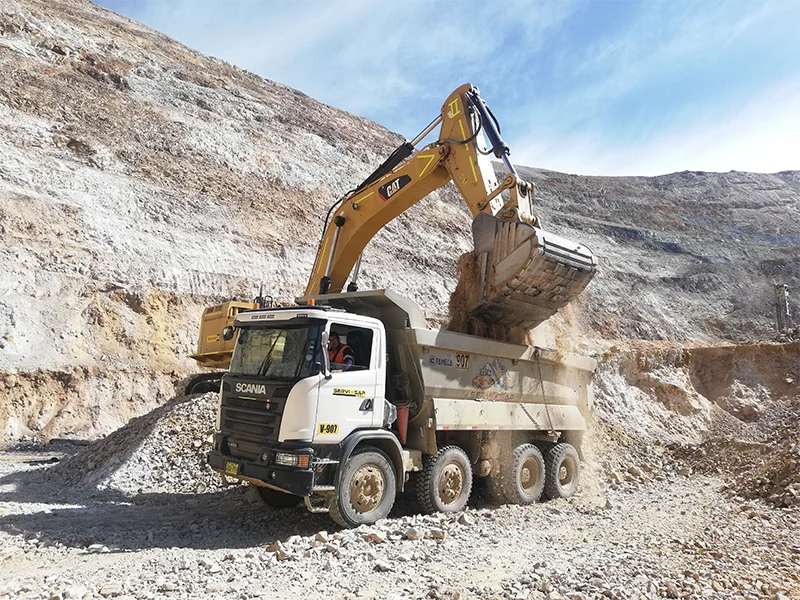
Mining
Heavy-duty wear parts for abrasive mining conditions.
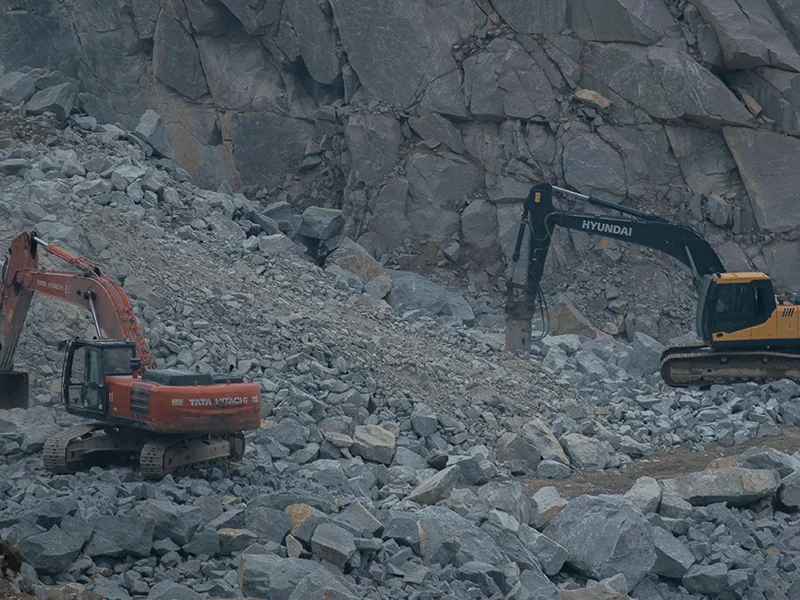
Quarrying
Reliable GET parts for high-impact quarry operations.
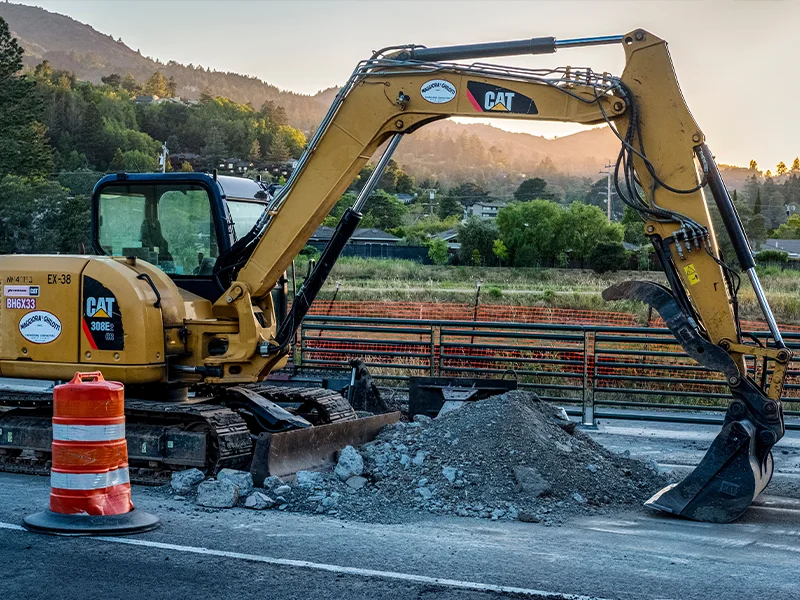
Construction
General-purpose bucket teeth and adapters for construction equipment.
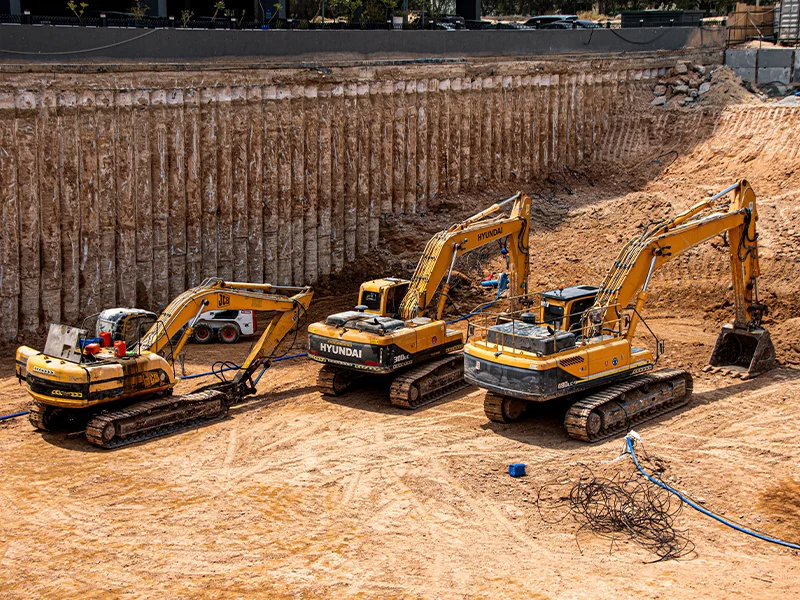
Earthmoving
Durable replacement parts for digging, trenching and bulk material handling.
Not sure which application fits your project?
Request Expert Help Send your machine model or working condition for recommendation.
SELECTION GUIDE
How to Select the Right Part
Four steps are usually enough to confirm a replacement reference.
- Identify equipment brand
Start from the machine make and model shown on the machine plate.
- Confirm machine model
Match the model and, where possible, the bucket arrangement.
- Check the existing part number
Read the reference from the worn part or from the parts book.
- Send photo or drawing if unsure
Provide photographs or measurements so the part can be reviewed.
BEFORE YOU INQUIRE
Frequently Asked
Questions
What is the difference between a sharp tooth and a tiger tooth?
Both are pointed profiles; the two labels come from the source references rather than from a fixed standard. The practical difference is tip geometry and the amount of material behind the point, which is why the listed photographs should be compared against the tooth being replaced. Send the part number or a dimensioned photograph if two references look close.
When is a pointed profile the wrong choice?
A narrow tip concentrates force, so it is the wrong choice where the difficulty is impact rather than penetration: solid rock, blocky ground or demolition material will break a pointed tooth before it wears out. Penetration profiles are also more likely to be lost or broken when used outside their intended conditions. Keep standard or heavy-duty profiles for that work.
Do pointed teeth wear out faster than standard teeth?
Yes. A narrow working edge carries less wear volume than a full standard profile, so a pointed tooth normally has a shorter change interval even in the same material. The trade-off is deliberate: better penetration in compacted or frozen ground in exchange for more frequent replacement.
Can I specify the tip length, and how does it affect life?
Where a drawing or sample is available, yes. A longer, thinner tip penetrates more easily but has less material behind the point, so it breaks more readily and wears through sooner; a shorter, fuller tip trades penetration for life. Send the required tip geometry, connection details and quantity so the profile and tooling can be reviewed.
Are pointed teeth suitable for frozen or compacted ground?
That is where they are most useful. A pointed profile breaks into hard layers with less breakout force, which is why sharp and tiger forms are used in compacted soil, hard clay and frozen ground, and why they put less load on the machine than a wide standard tooth.
Should pointed teeth be fitted on every position, or only on the corners?
Corner positions usually take the hardest penetration load and wear faster than the centre, so pointed profiles are often fitted at the corners with standard teeth through the centre. Fitting every position with pointed teeth gives maximum penetration but shortens the overall change interval. State the bucket arrangement and the ground so the mix can be reviewed.
LET’S IDENTIFY YOUR PART
Request a Quote for Excavator Sharp & Tiger Teeth
Send us your model, part number, drawing or product photo. We’ll help identify the correct part and prepare a quotation.
- Machine model
- Part number
- Drawing
- Product photo
- Required quantity
- Drawings and technical files are kept confidential
- OEM / custom casting supported
- Reply within 12–24 hours