
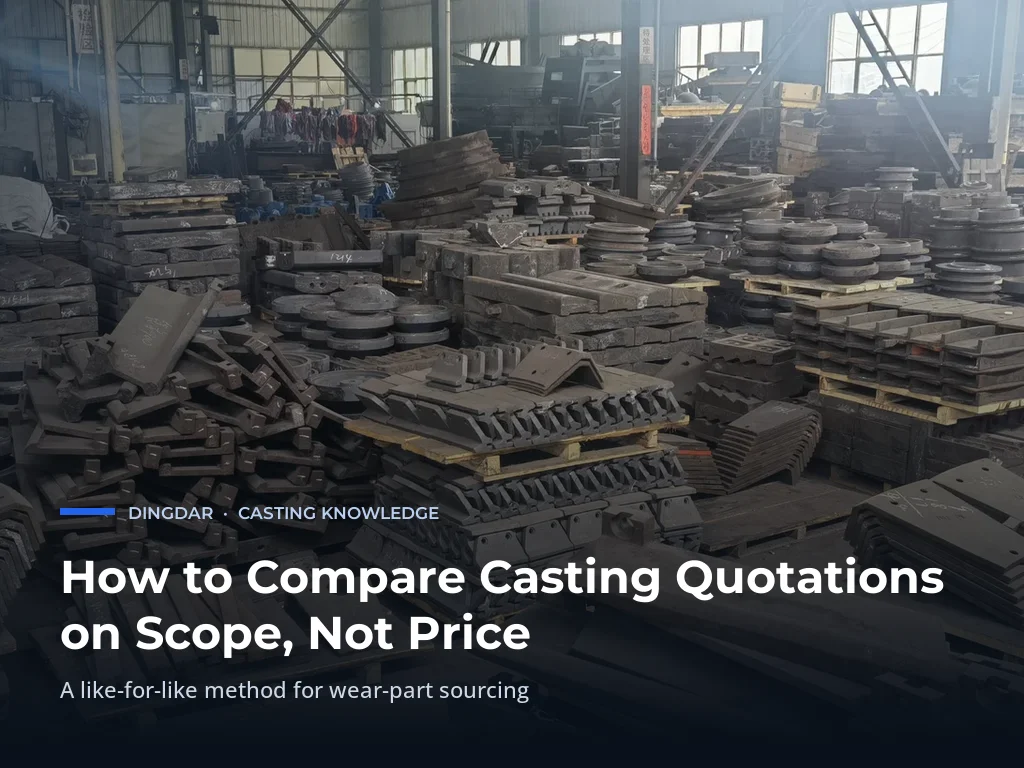
How to Compare Casting Quotations on Scope, Not Price
Learn how to compare casting quotations on scope, not price: delivery condition, machining, inspection, tooling, exclusions and release quantities.
Read articleBUYER & PROJECT PLANNING HUB
Practical guidance for evaluating suppliers, comparing equipment, and planning casting equipment and production-line projects.
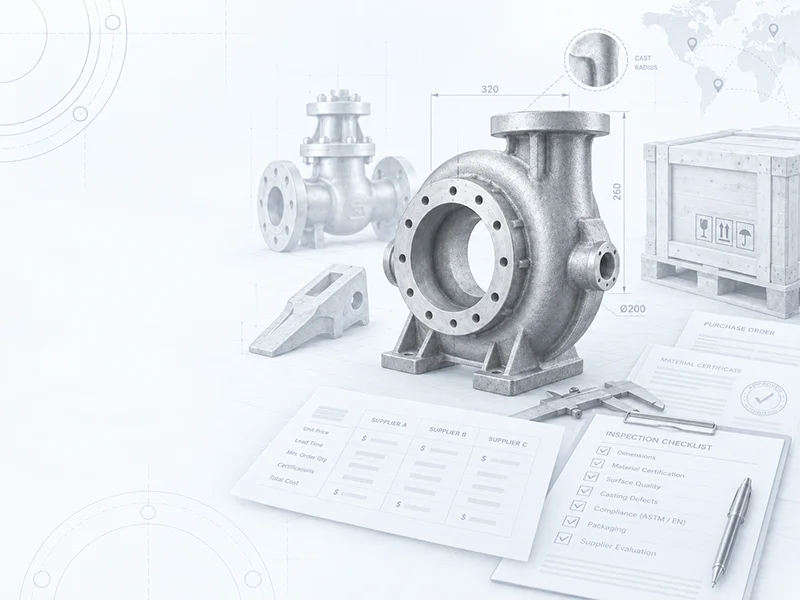
01 / ALL ARTICLES
3 published articles filed under Buyer Guides. Each one is written from project and inspection work, not from a template.
Learn how to compare casting quotations on scope, not price: delivery condition, machining, inspection, tooling, exclusions and release quantities.
Read article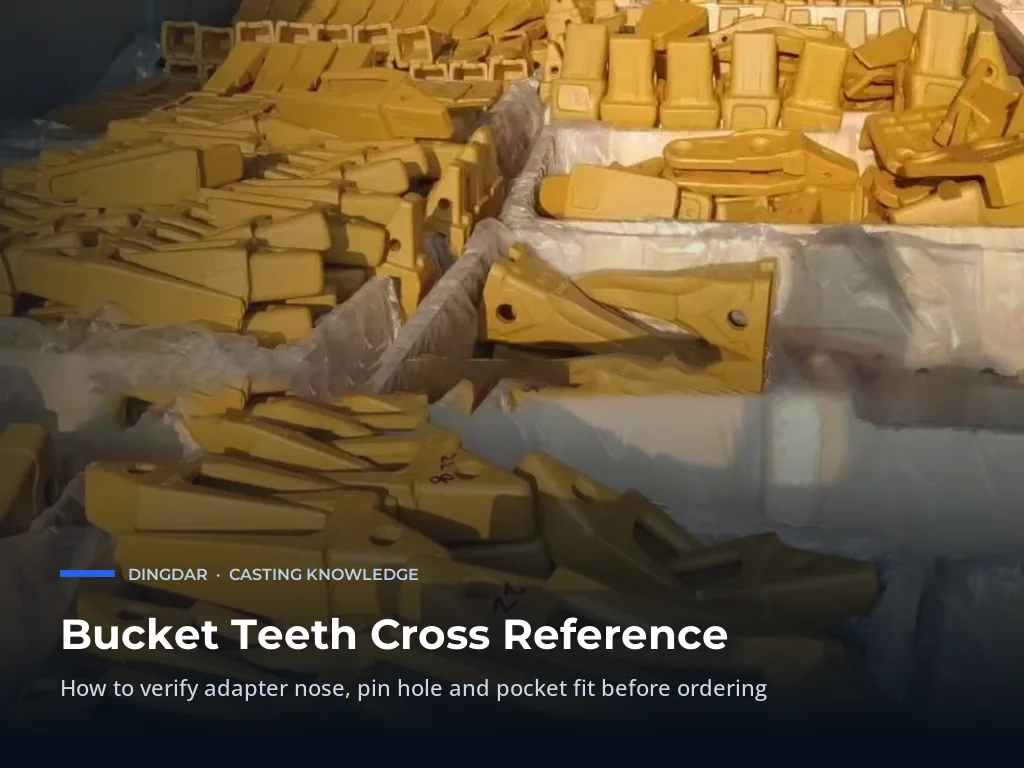
How to verify bucket teeth cross reference before ordering: check the adapter nose, pin and retainer system, key dimensions and wear on the old part.
Read article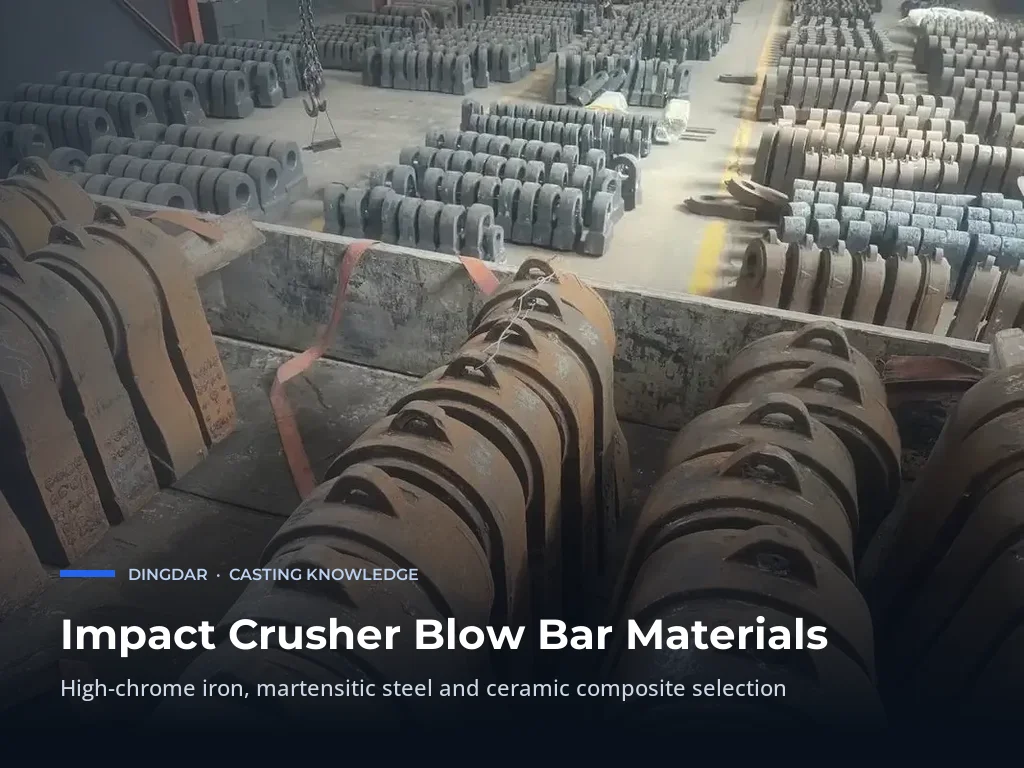
Compare impact crusher blow bar materials: high-chrome iron, martensitic steel, ceramic composites, wear and breakage, and a pre-quote checklist.
Read article02 / TOPIC
Assess manufacturing fit, quality controls, documentation, sample approval and project communication—not price alone.
03 / TOPIC
Make capacity, layout, utility and automation assumptions explicit before comparing proposals.
04 / TOPIC
Compare what is included in a proposal before using price as the deciding factor.
05 / RELATED PAGES
06 / FAQ
The questions engineers and buyers raise most often about the topics in this hub.
Normalise them first: the same part or equipment scope, quantity basis, material, inspection requirement and delivery terms. The quotation guides list the items worth aligning before the price is compared.
Evidence of the controls that matter for your part: material certification, inspection records, sample approval and the documentation that travels with the shipment. The supplier selection guides cover how to ask for it.
Not on its own. Scope, quantity basis, inspection level and delivery terms decide what is actually being compared, which is why the guides start with scope rather than price.
The part revision, the sample approval step, the inspection requirement, the logistics arrangement and who signs off at each stage.
Yes. Send the shortlist, the quotations and the requirements you are working to; the review focuses on the assumptions behind each offer rather than on the brand.
BUYING QUESTIONS
Share the application, the equipment or part scope, and the quotations you are comparing. We review the supplier and project assumptions against the same evaluation practice these guides are written from.