
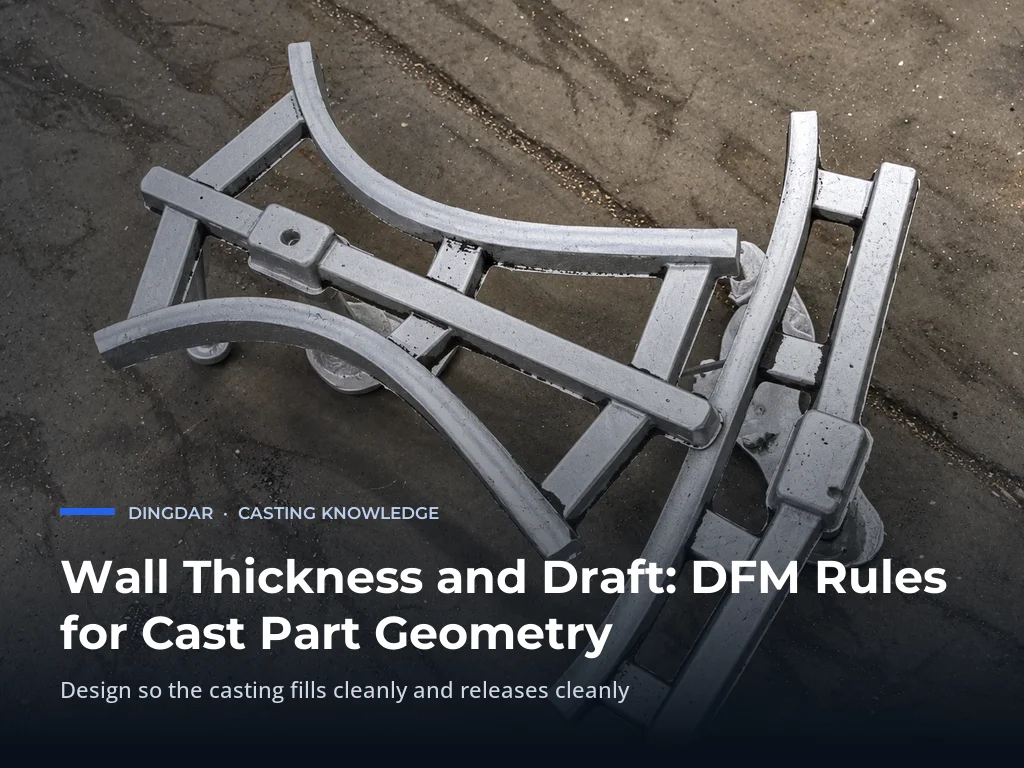
Wall Thickness and Draft: DFM Rules for Cast Part Geometry
How wall thickness and draft angle rules shape castable geometry: recommended values by process and alloy, plus the DFM checks that cut scrap and rework.
Read articleENGINEERING KNOWLEDGE HUB
Practical engineering guidance for designing cast parts, improving manufacturability and reducing production risks.
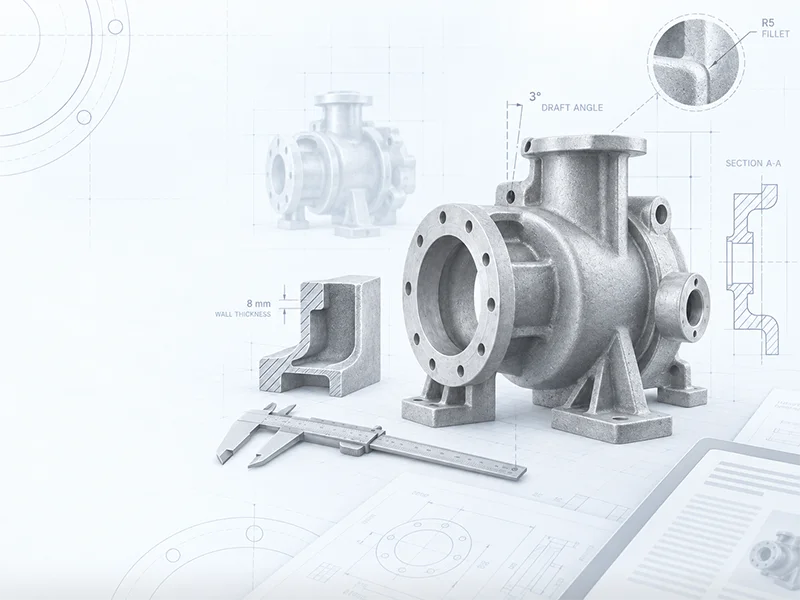
01 / ALL ARTICLES
3 published articles filed under Design & DFM. Each one is written from project and inspection work, not from a template.
How wall thickness and draft angle rules shape castable geometry: recommended values by process and alloy, plus the DFM checks that cut scrap and rework.
Read article
How to specify pump and valve casting inspection: material certificates, sealing surfaces, internal defect NDT, pressure tests and acceptance records.
Read article
How to choose construction equipment wear part materials by service condition: abrasion vs impact, material families, heat treatment and inspection.
Read article02 / TOPIC
Prepare the geometry questions that influence process, tooling and downstream machining.
03 / TOPIC
Keep shrinkage, machining, tolerance and finish requirements visible in the drawing review.
04 / TOPIC
Use the review to identify risk areas before process and inspection planning are finalized.
05 / RELATED PAGES
06 / FAQ
The questions engineers and buyers raise most often about the topics in this hub.
Wall thickness and section changes, draft angles, fillets, machining and contraction allowances, and the datum scheme. The guides cover them in the order they affect tooling and cost.
It depends on the process route, the surface being finished and the final requirement. The allowance guides give the pattern and the reasons behind it; the value is confirmed during the technical review.
Draft and fillets are needed on every route. What changes is how much, and what forms the surface, so the guides separate the pattern-based and tooling-based cases.
Yes, and that is the cheapest point to raise geometry questions: send the model or sketch with the critical dimensions and the points you are still deciding.
The technical team reviews it against the same DFM practice these guides are written from and replies with the points to confirm, not a generic quotation.
DESIGN REVIEW QUESTIONS
Send the drawing or model together with the critical dimensions. We review geometry, allowances and defect risks against the same DFM practice these guides are written from.