
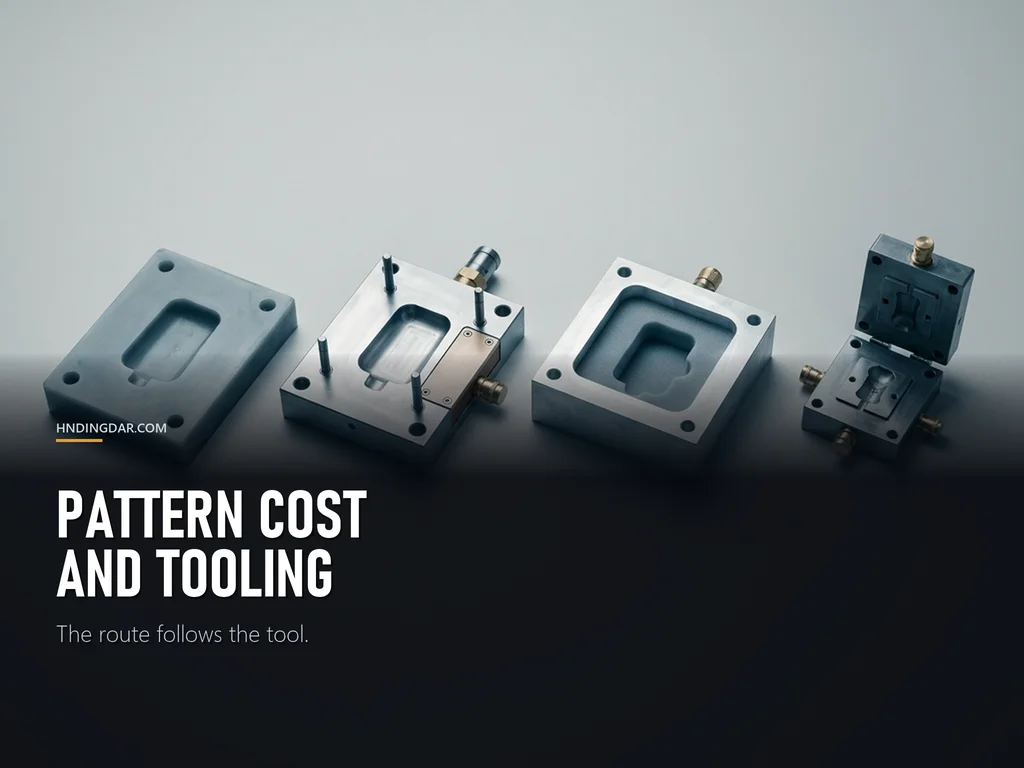
Casting Pattern Cost: How Tooling Drives the Route Decision
What drives casting pattern cost across green sand, shell, lost foam and investment tooling, and how the one-time charge sets the route.
Read articleDINGDAR KNOWLEDGE
Practical casting knowledge for engineers, buyers and manufacturing teams — covering processes, materials, equipment and sourcing.
01 / START HERE
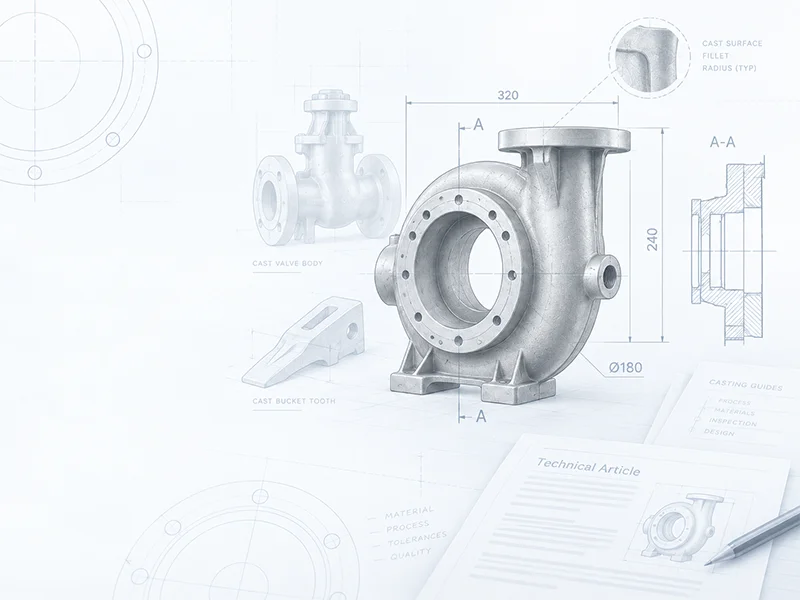
The latest guidance published by the DINGDAR technical team.
What drives casting pattern cost across green sand, shell, lost foam and investment tooling, and how the one-time charge sets the route.
Read article02 / EXPLORE BY CATEGORY
Each category holds the articles filed under it, together with the process, equipment and project pages that support the topic.
03 / BROWSE BY TOPIC
Use the topic routes when you already know what you need to decide.
04 / ALL ARTICLES
Filter by category or search the index when you already know what you are looking for.
What drives casting pattern cost across green sand, shell, lost foam and investment tooling, and how the one-time charge sets the route.
Read article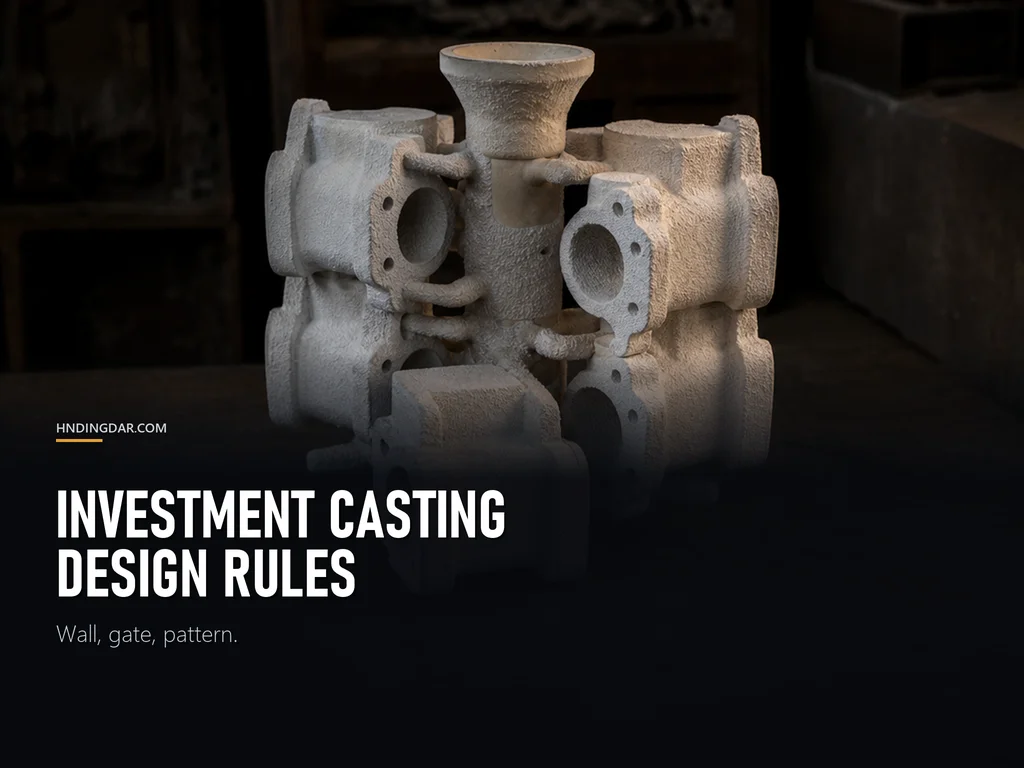
How wall thickness, wax pattern and die limits, gating and cored cavities decide what investment casting can make, and how a first article proves it.
Read article
How quenching, tempering and surface hardening are chosen for cast wear parts, and how to verify hardness, case depth, structure and distortion.
Read article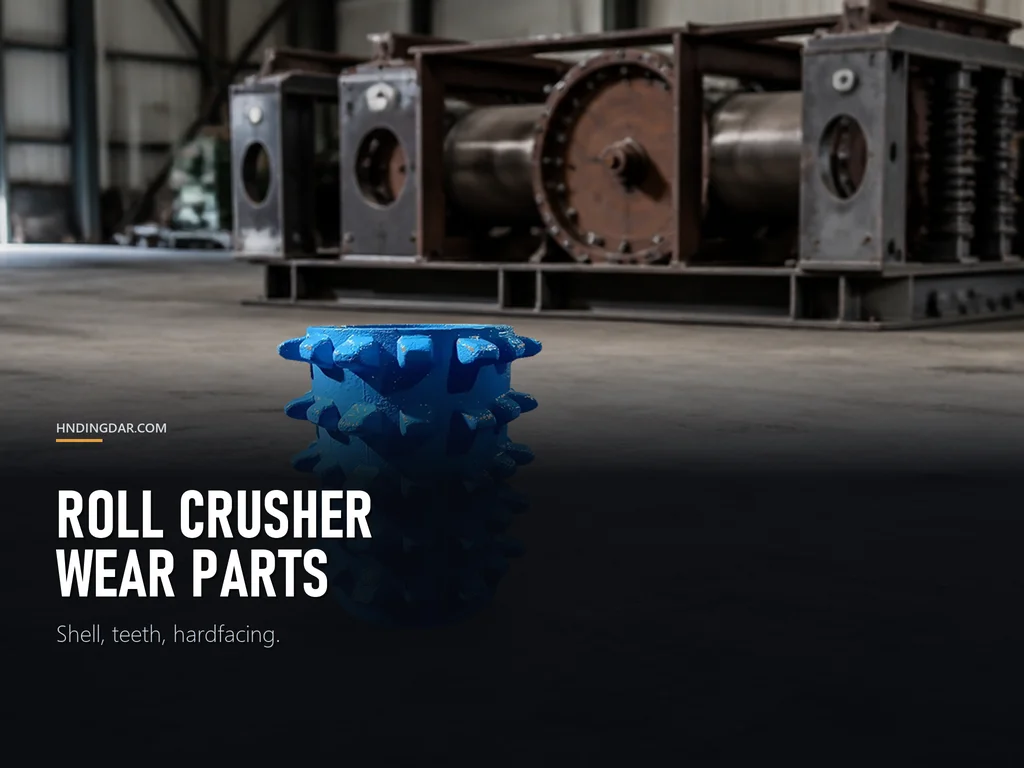
Roll crusher wear parts guide: roll shells, tooth crowns, side plates, failure modes, material choices, hardfacing repair rules and buying checks.
Read article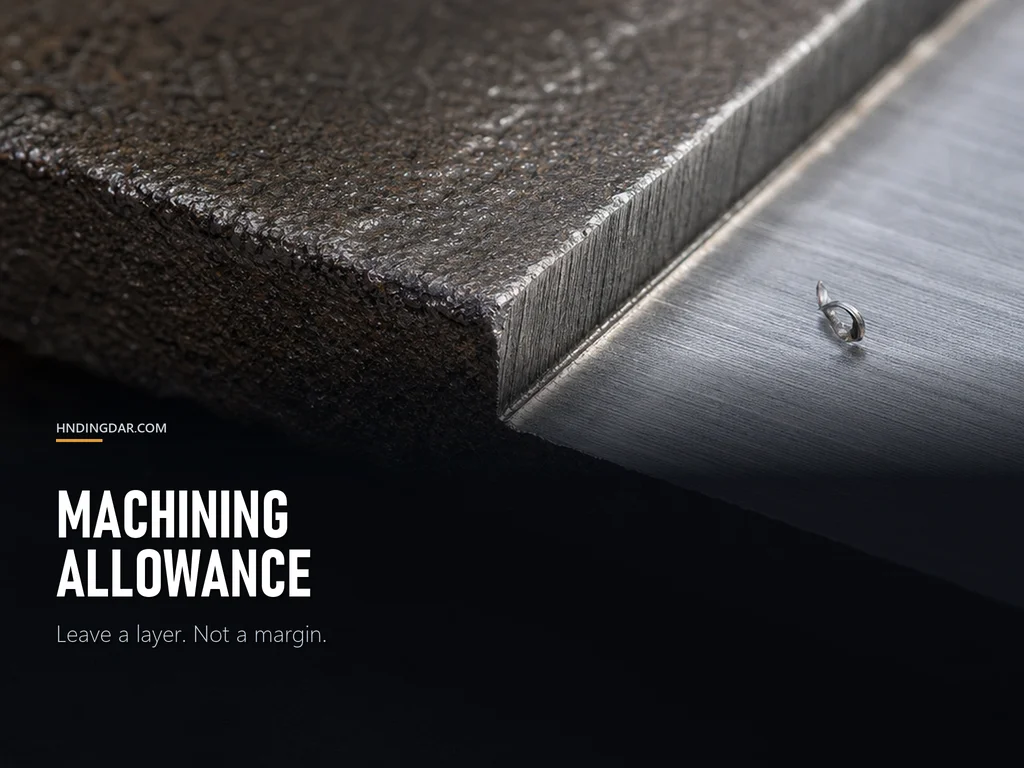
Where to leave machining allowance on castings, what drives the amount, and what too much or too little does to cleanup, wall thickness and porosity.
Read article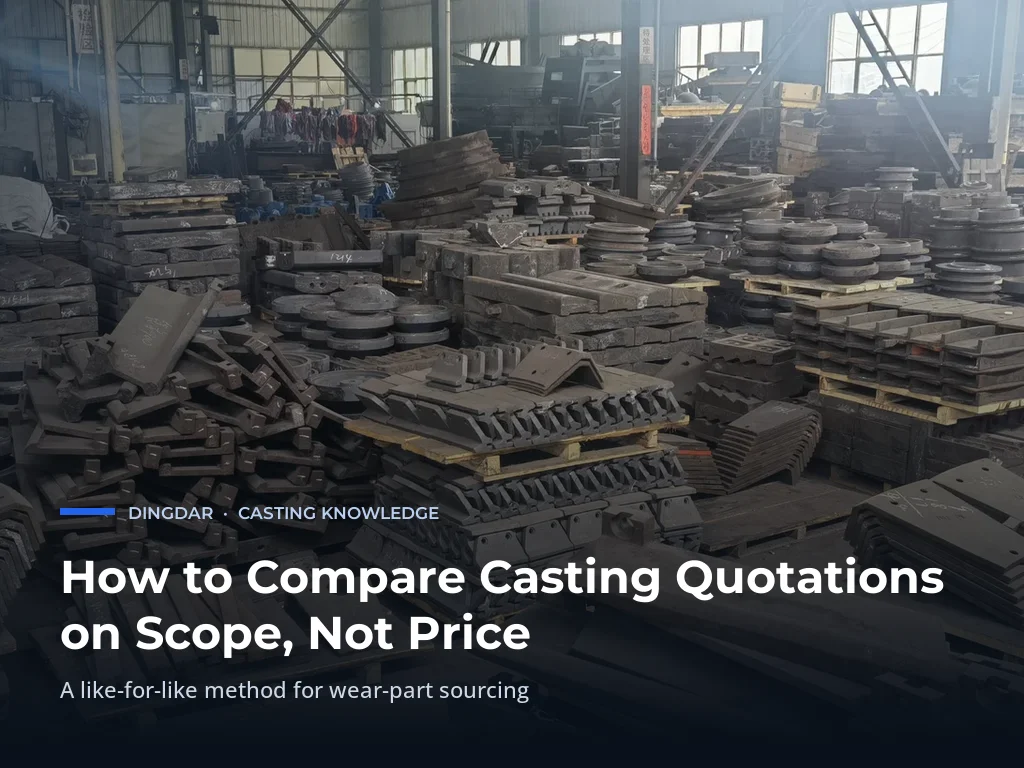
Learn how to compare casting quotations on scope, not price: delivery condition, machining, inspection, tooling, exclusions and release quantities.
Read article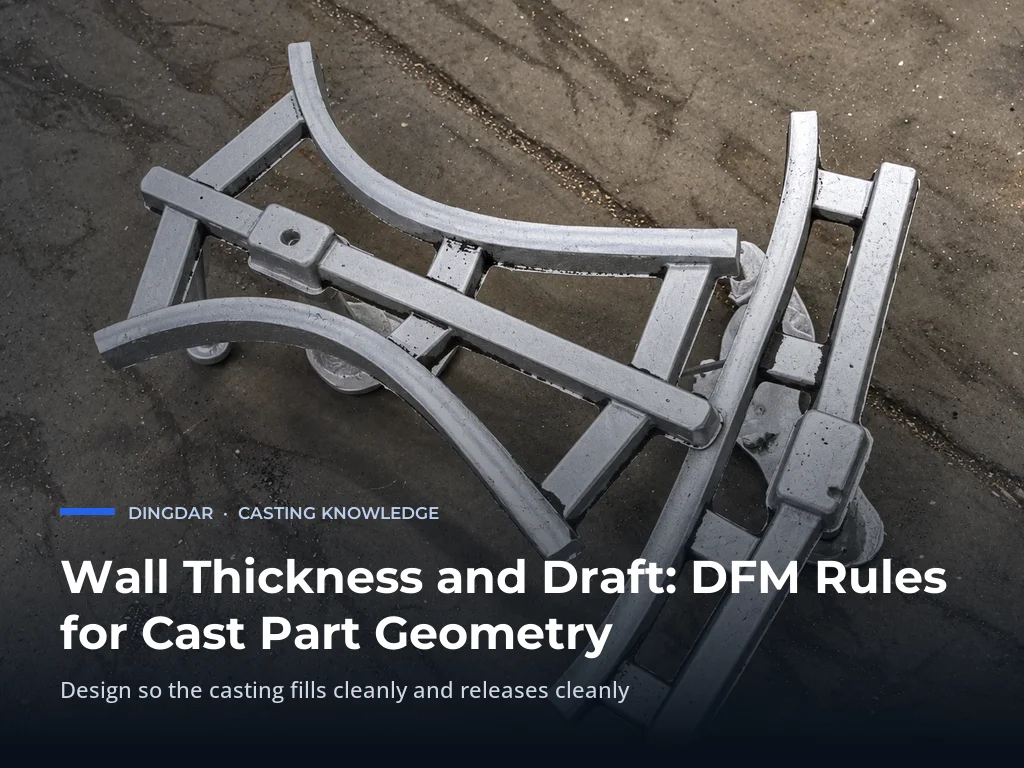
How wall thickness and draft angle rules shape castable geometry: recommended values by process and alloy, plus the DFM checks that cut scrap and rework.
Read article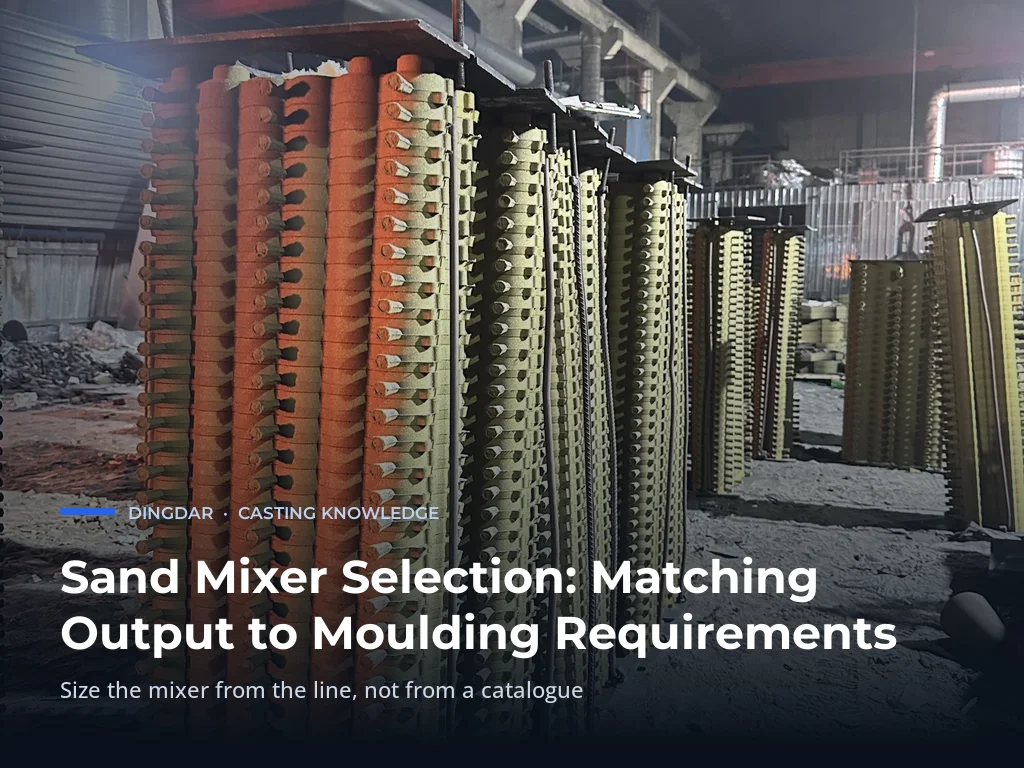
How batch size, cycle time, binder system and moulding rate determine which sand mixer fits a moulding line.
Read article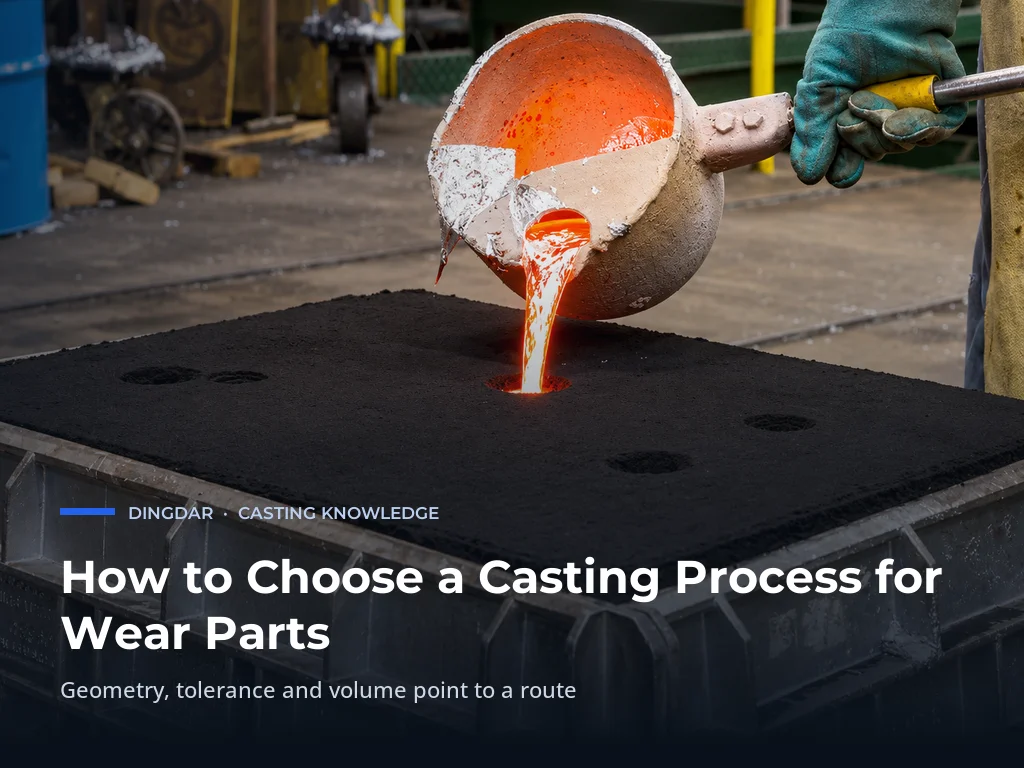
Compare green sand, shell moulding, lost foam, and investment casting to pick the right route for wear parts by geometry, tolerance, batch, and cost
Read article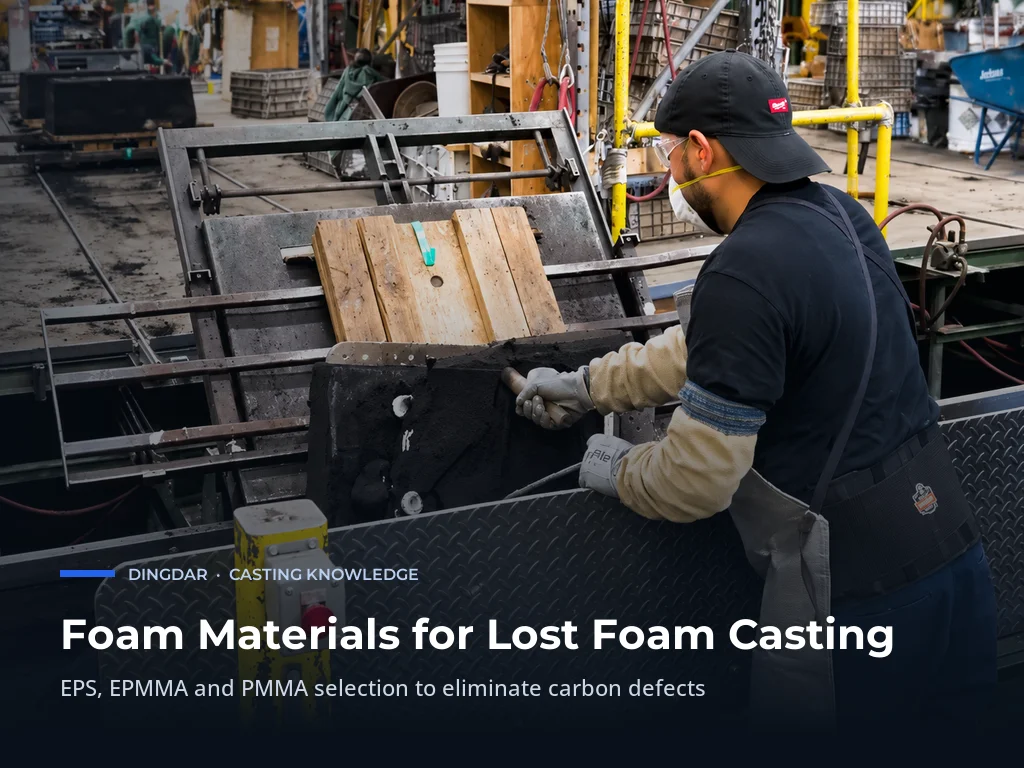
Choose EPS, EPMMA or PMMA for lost foam casting: decomposition, pattern foam density, moulding, coating and venting, plus a spec and trial checklist.
Read article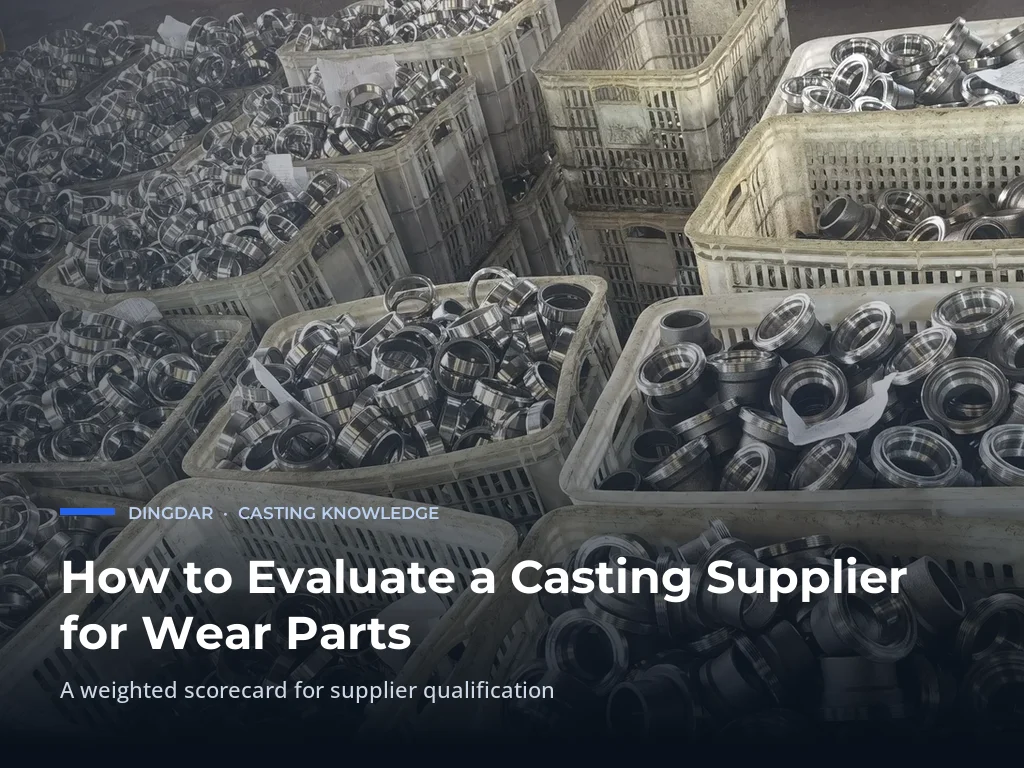
A buyer's framework for evaluating a casting supplier for wear parts: process fit, material control, inspection, certification and documentation.
Read article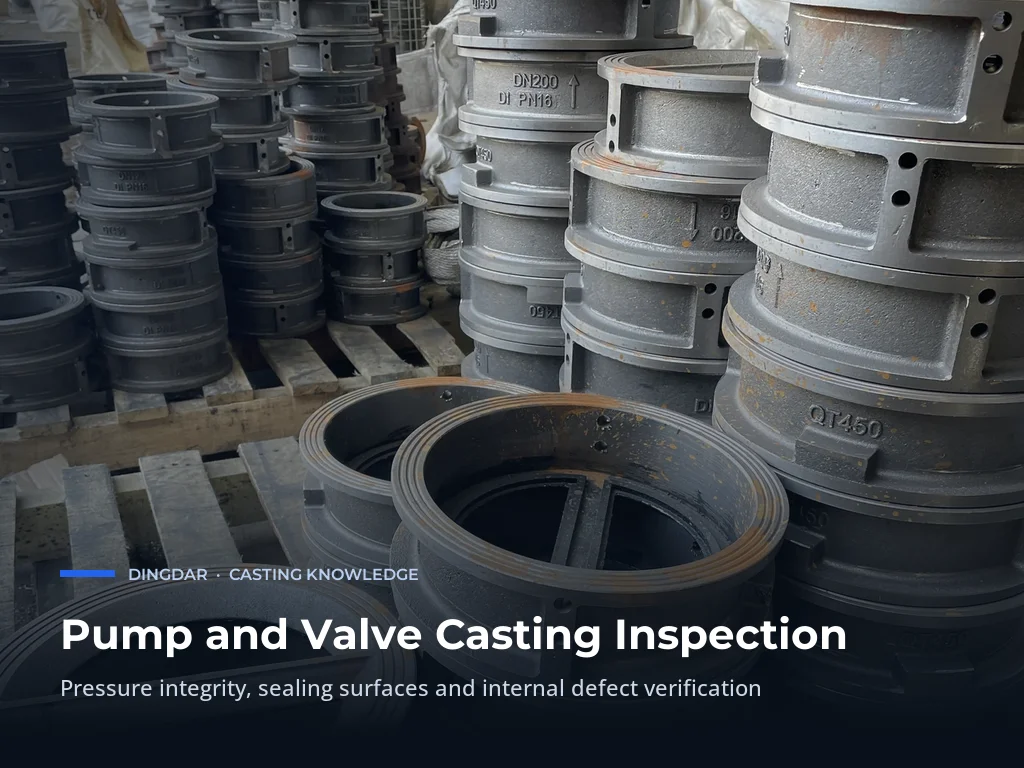
How to specify pump and valve casting inspection: material certificates, sealing surfaces, internal defect NDT, pressure tests and acceptance records.
Read article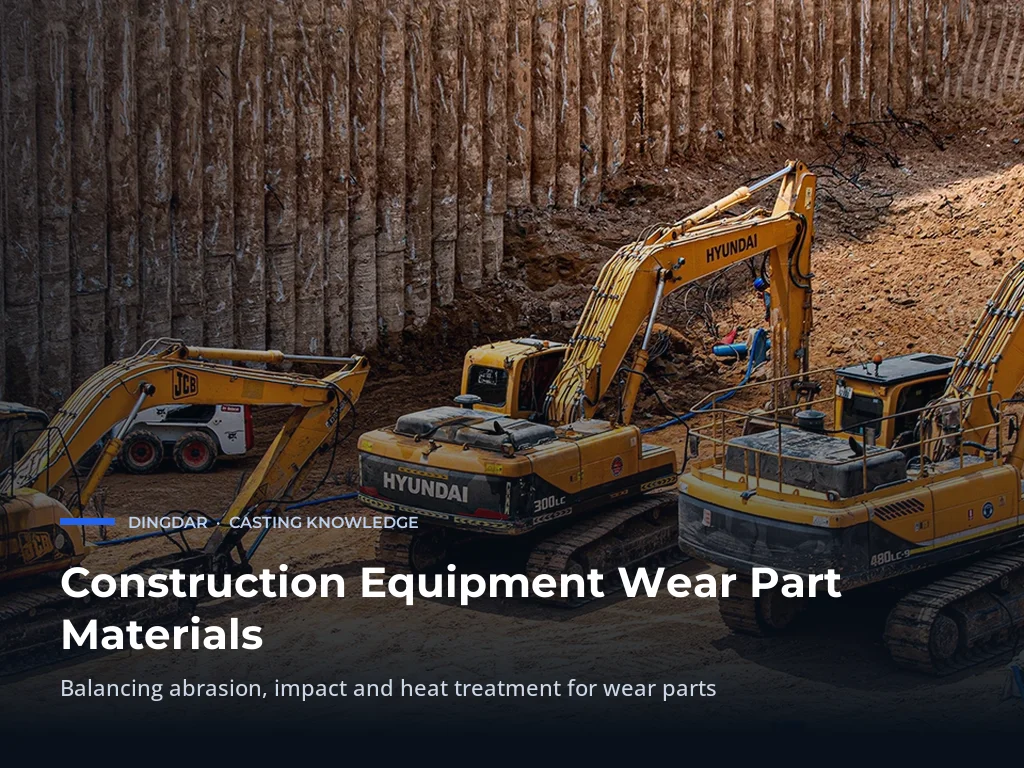
How to choose construction equipment wear part materials by service condition: abrasion vs impact, material families, heat treatment and inspection.
Read article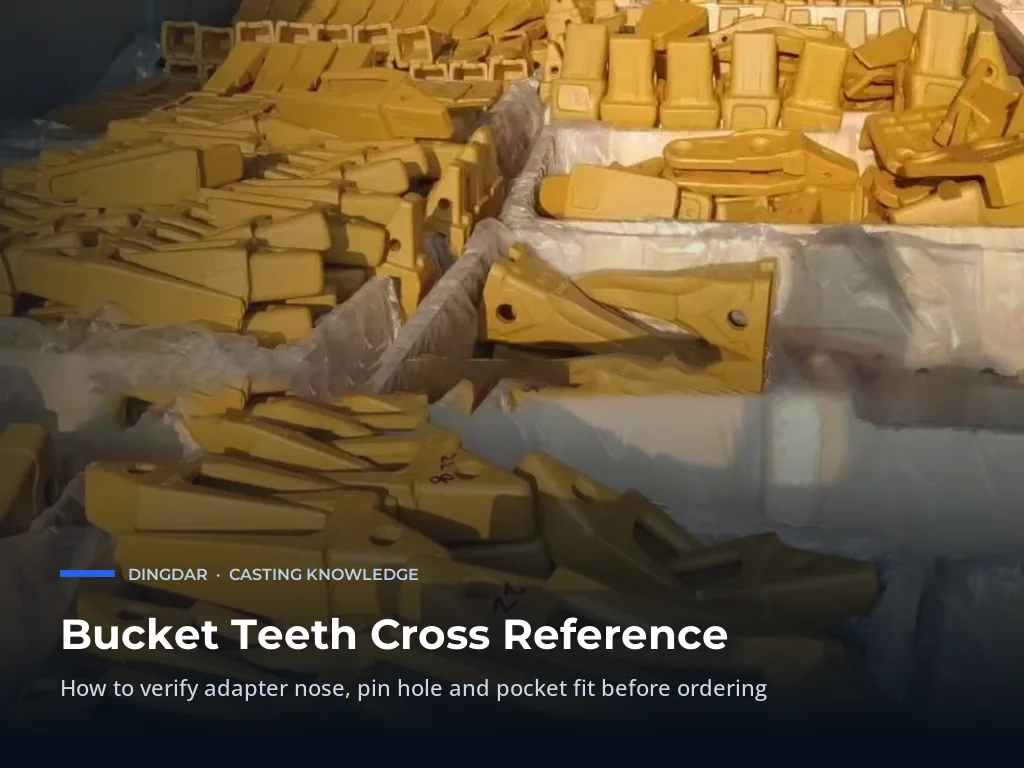
How to verify bucket teeth cross reference before ordering: check the adapter nose, pin and retainer system, key dimensions and wear on the old part.
Read article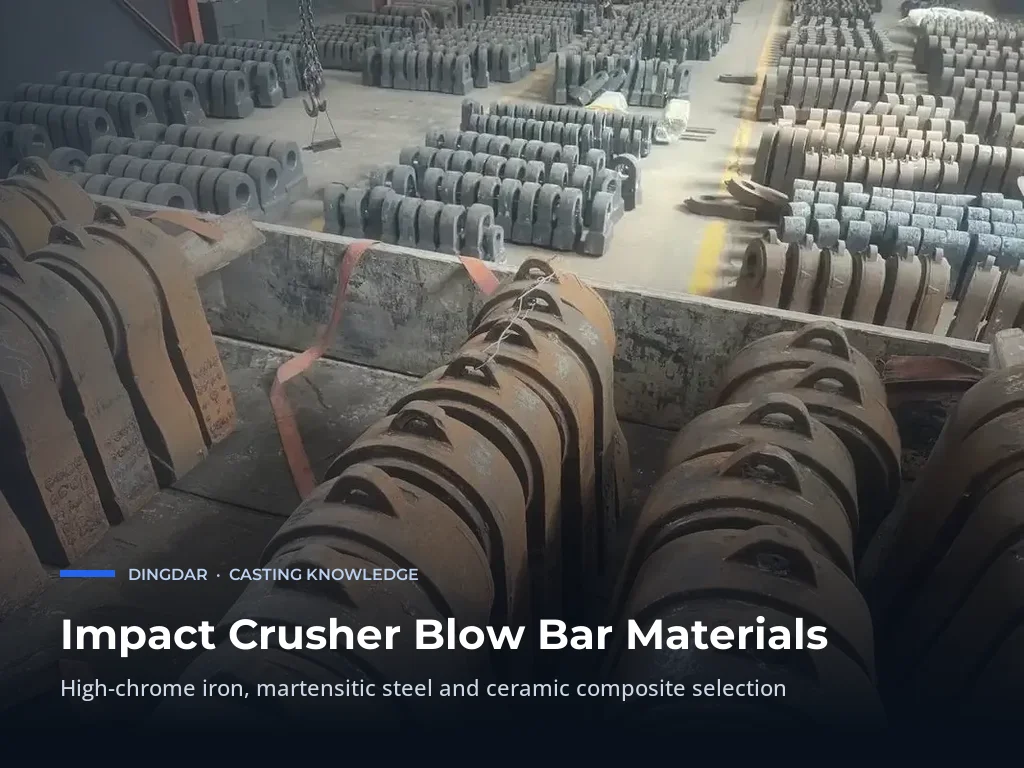
Compare impact crusher blow bar materials: high-chrome iron, martensitic steel, ceramic composites, wear and breakage, and a pre-quote checklist.
Read articleTry another category, clear the search term, or return to the full article index.
05 / KNOWLEDGE ROUTES
When a guide answers your question, these routes carry the decision further.
06 / FAQ
Every published article is listed here, newest first. Each article also belongs to the knowledge hub that matches its subject, so you can filter the list by category or search the index by keyword.
No. Use the guides to prepare the inputs we need — drawing revision, material, quantity, application and inspection requirements — then send them through the inquiry form or by email. Our team usually replies within one business day.
Start from the question you already have: process selection, foundry equipment, design and DFM, or buyer and project planning. If the part is already defined, the design and DFM guides help you prepare a more useful drawing review.
The site covers cast iron, steel, stainless steel and high-manganese steel options. The final grade is confirmed against the part, application and inspection requirement during the technical review.
QUESTIONS AFTER READING
Send the drawing, material, quantity and application you are working on. We review it against the same practice these articles are written from, and reply with a technical position rather than a generic offer.