
Ref LT-001 · SDLG
CONSTRUCTION MACHINERY / ADAPTERS & HOLDERS
Loader Adapters & Tooth Holders
Adapter and holder references that carry the tooth on the loader bucket edge and take the load behind it.
- 12 catalog references
- OEM / custom support
- Multi-brand compatibility
LOADER ADAPTERS / HOLDERS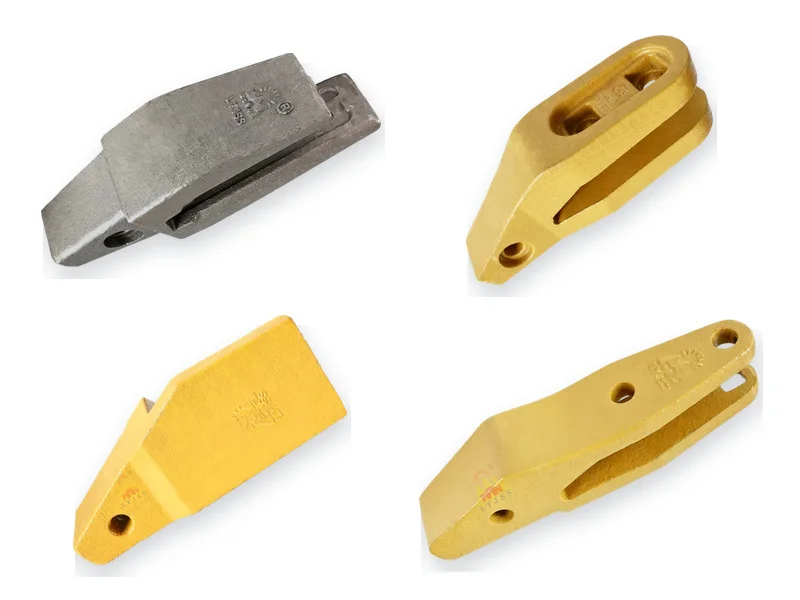 REPRESENTATIVE REFERENCES · 12
OEM / Custom InquiriesMultiple Model ReferencesComponent ReferencesBulk Order Inquiries
CATEGORY OVERVIEW
What Are Loader Adapters & Tooth Holders?
The adapter, also called the holder, a tooth base or simply the root, is the part that connects the tooth to the bucket. On a loader bucket it is commonly bolted: the holder straddles the base edge, with an opening between its legs and a bolt pattern through the mounting plates, so it can be replaced at the machine without welding and without putting heat into the bucket edge. Weld-on adapters form a permanent connection instead. Either way the holder sets the tooth position and takes the load behind the wear point, so it is replaced only when the nose or the mounting area wears. This category lists holder references identified by source machine or brand label. Opening size, bolt hole pattern, nose length and retaining position are confirmed from the tooth and the edge you already have before an order is placed.
- Bolt-on and weld-on forms
- Edge opening and bolt pattern
- Tooth nose and retaining position
- OEM / custom available
BROWSE BY EQUIPMENT BRAND
Browse Products by Equipment Brand
12 product references
Select an equipment brand to narrow the product range.
Showing 12 of 12 products
Ref LT-017 · SDLG
SDLG 50 Center Adapter ( SDLG Mark 35#)
Ref LT-029 · XCMG
XCMG 30 Tooth Holder
Ref LT-031 · XCMG
XCMG 50 Rock Adapter
Ref LT-034 · XCMG
XCMG 60 Tooth Holder
Ref LT-040 · LiuGong
LiuGong 40B Right Adapter
Ref LT-041 · LiuGong
LiuGong 40B Center Adapter ( Light )
Ref LT-050 · LiuGong
LiuGong 50 Adapter
Ref LT-054 · LiuGong
LiuGong 60 Adapter
Ref LT-063 · Lonking
Lonking Tooth Holder (32 Opening ) Bolt
Ref LT-064 · Lonking
Lonking Tooth Holder (40 Opening ) Bolt
Ref LT-065 · Lonking
Lonking Tooth Holder ( Heavy )
No products found for this brand
We may still be able to supply a compatible replacement.
Request Matching Help →Brand names identify catalog references and do not imply affiliation. Model references alone do not confirm compatibility. Numbered references distinguish source entries and do not establish different geometries.
A MODEL IS ONLY THE START
Can’t Find Your Part?
Send the details you have so the part can be identified and reviewed.
Send Your Requirement →- Part number & machine model
- Drawing or mounting dimensions
- Product photographs
- Sample specifications
- Required quantity
COMPATIBLE EQUIPMENT BRANDS
Compatible Equipment Brands
4 brands represented in this category.
 LiuGong
Adapter and holder references for selected LiuGong machines.
4 references XCMG
Adapter and holder references for selected XCMG machines.
3 references Lonking
Adapter and holder references for selected Lonking machines.
3 references SDLG
Adapter and holder references for selected SDLG machines.
2 references
Brand names identify catalog references and do not imply affiliation. Confirm fit by part number and dimensions.
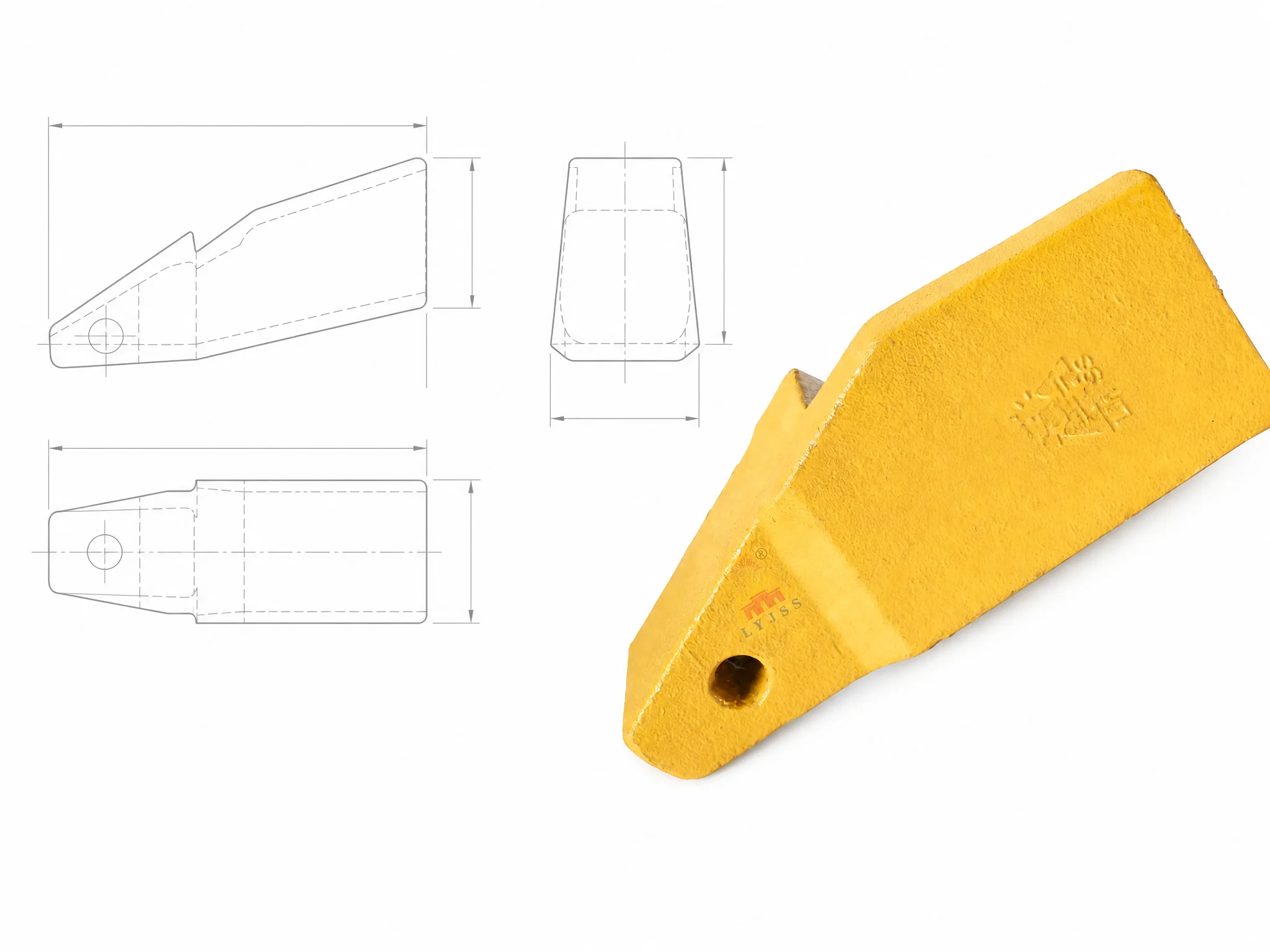 OEM / CUSTOM CASTING · LOADER ADAPTER
BEYOND THE CATALOG
OEM & Custom Casting
Start a manufacturing review with your drawing, sample or existing part specification. Include tooth position, mounting connection and bucket layout.
Drawing-based requirements
Sample reference
Custom dimensions
Branding / marking
DEFINE YOUR REQUIREMENTS
Casting & Manufacturing Review
Use these stages to specify the process and inspection requirements for your part.
01
Casting
Part geometry & material
02
Heat Treatment
Hardness requirements
03
Machining
Mounting dimensions
04
Inspection
Acceptance criteria
05
Surface Finishing
Surface requirements
Material grade, hardness, dimensions and acceptance criteria are confirmed during technical review.
View Our Casting CapabilitiesBUILT FOR REAL WORK
Applications
Loader teeth, sleeves and holders for abrasive bulk handling and mixed site ground.
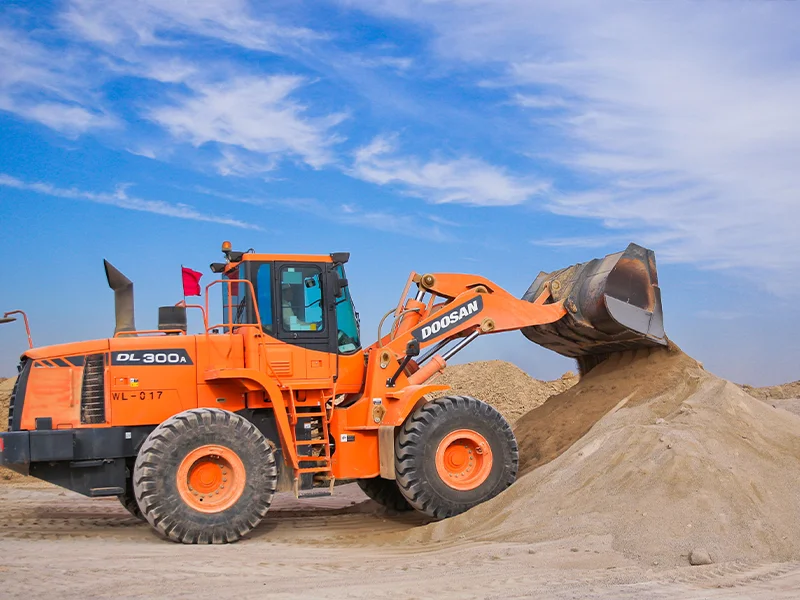
Aggregates & Sand
Replacement teeth for stockpiling and loading loose aggregate, where the tooth stays in contact with abrasive material through the cycle.
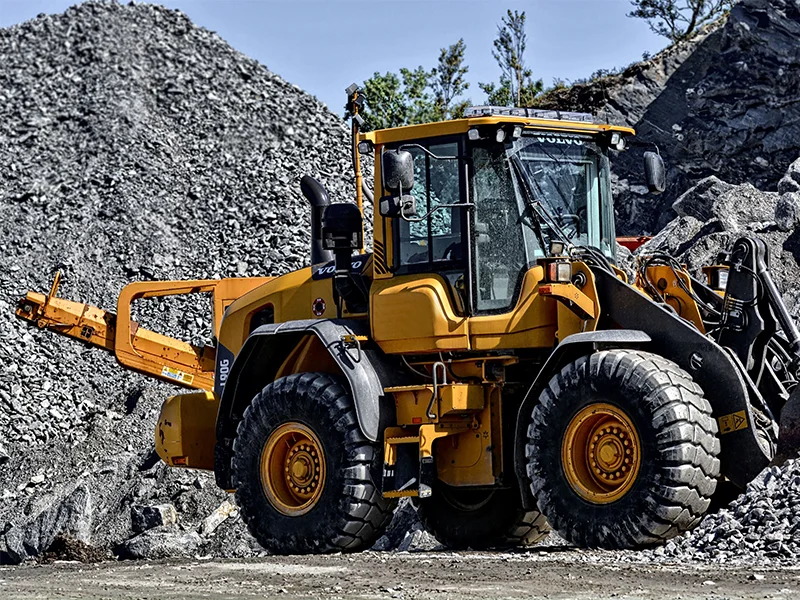
Quarry & Crushed Rock
Teeth for face loading and stockpile work in crushed stone and shot rock, where abrasion and impact arrive together.
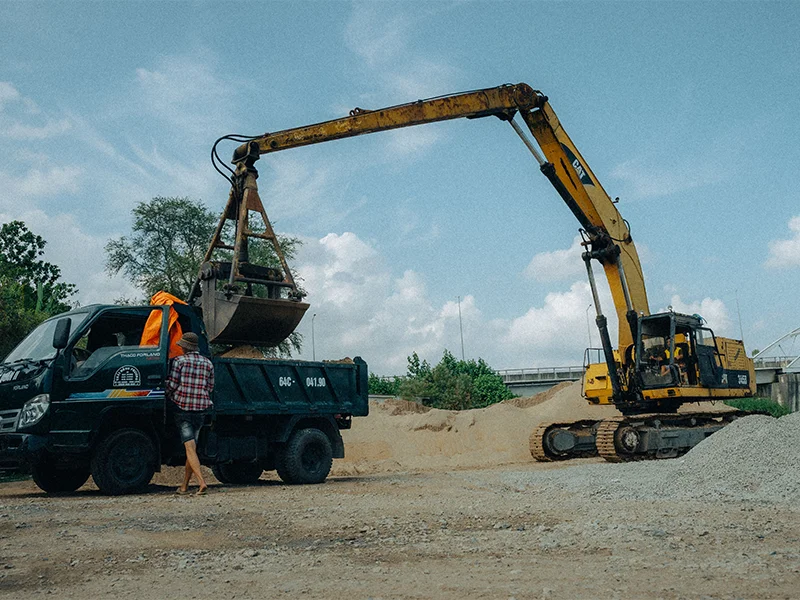
Bulk Material Handling
Teeth, sleeves and holders for stockyards and transfer points where the loader keeps a high cycle count through the shift.
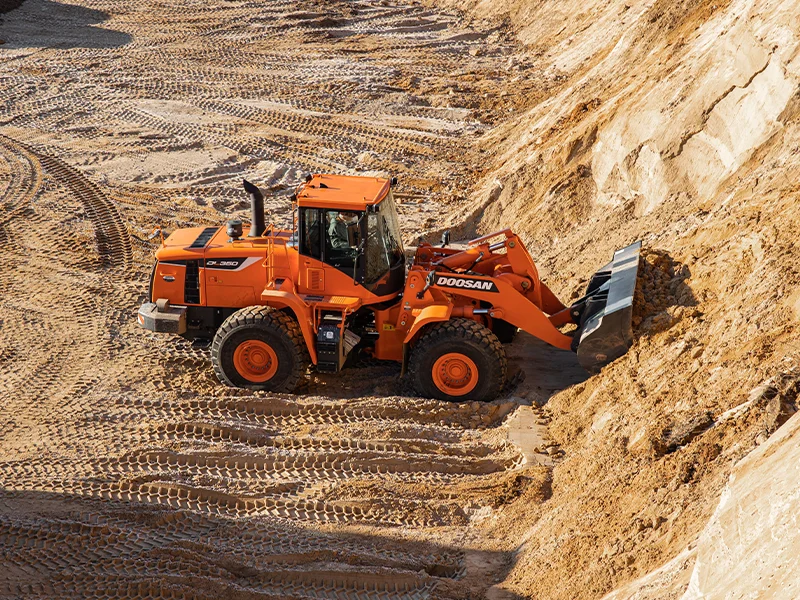
Site Earthworks & Backfilling
Teeth for mixed ground, trench backfill and levelling, where the bucket is also dragged across the surface to grade.
Not sure which application fits your project?
Request Expert Help Send your machine model or working condition for recommendation.
SELECTION GUIDE
How to Select the Right Part
Four steps are usually enough to confirm a replacement reference.
- Identify equipment brand
Start from the machine make and model shown on the machine plate.
- Confirm machine model
Match the model and, where possible, the bucket arrangement.
- Check the existing part number
Read the reference from the worn part or from the parts book.
- Send photo or drawing if unsure
Provide photographs or measurements so the part can be reviewed.
BEFORE YOU INQUIRE
Frequently Asked
Questions
How do I know the holder needs replacing and not just the tooth?
The clear signs are a worn or rounded nose, wear on the legs or the mounting faces, teeth that start breaking or coming off when they did not before, and a new tooth that still moves with a correct fastener fitted. A holder normally serves several sets of teeth, so replacing it is a planned decision rather than a routine one. Photograph the nose and the mounting area with the tooth removed, so the wear can be assessed before a holder is quoted.
What does the opening figure in a holder reference mean, and how do I measure it?
A bolted holder is made for the edge it clamps, and the opening is the gap the bucket edge sits in. The numbers that appear in the references, such as 32 and 40 opening, identify the size variant an entry was collected under rather than a dimension you can rely on. Measure the gap between the legs on your own bucket, the bolt hole diameter and the distance between the hole centres, and send those with the machine model and the tooth the holder carries, so the variant can be confirmed.
Should I choose a bolt-on or a weld-on holder on a loader bucket?
Both are listed and both are used on loaders. A bolt-on holder can be replaced without welding, puts no heat into the bucket edge and can be moved to another bucket of the same size, at the cost of a bolted joint that has to be checked for tension. A weld-on adapter gives a rigid connection and is normally chosen where the bucket is worked hard, but changing it is a workshop job. Send the edge thickness and the mounting form so the choice can be reviewed against your bucket.
Can the existing tooth be kept if the holder is changed?
Yes, where the holder and the tooth belong to the same system: the nose, tooth size and retaining position all have to line up. That is also why the tooth is chosen first and the holder matched to it - keeping a sleeve range you already stock is usually worth more than a marginal change in holder design. Send the sleeve reference, or a photograph of it fitted on the worn holder, and the matching holder entries can be confirmed against it.
Are bolts, pins or retainers supplied with the holder?
Fasteners are listed as separate references and are not included unless the quotation states it. Say what the machine uses and whether the fastening set is wanted with each holder, because a pin or bolt has to match both the holder and the tooth it carries. On a bolted holder the fastening is also what keeps the holder on the edge, so it is confirmed together with the holder rather than chosen afterwards.
What shortens the life of a loader holder?
Running with a missing or badly worn tooth is the main cause: the neighbouring positions take up the extra load and the unprotected nose wears directly. A tooth that moves on the nose grinds the fit surface that holds it, and highly abrasive material wears the holder legs and mounting faces as well. Fastening tension matters too, because a holder that can move on the edge wears its own mounting faces. Replace teeth before they are lost and check the nose each time a tooth is changed.
LET’S IDENTIFY YOUR PART
Request a Quote for Loader Adapters & Tooth Holders
Send us your model, part number, drawing or product photo. We’ll help identify the correct part and prepare a quotation.
- Machine model
- Part number
- Drawing
- Product photo
- Required quantity
- Drawings and technical files are kept confidential
- OEM / custom casting supported
- Reply within 12–24 hours